November 24, 2026 |
A tree could fall when it develops a sudden lean, deep trunk cracks, significant decay, dead structural branches, or damaged roots. These warning signs may indicate that the tree has lost some of its stability. The risk becomes more serious when the tree stands near a house, driveway, sidewalk, or other frequently used area.
Recognizing these problems early helps property owners arrange an inspection before the situation becomes dangerous.
What Are the 5 Warning Signs a Tree Could Fall?
The five warning signs include a new or worsening lean, trunk cracks, fungal growth, dead or hollow wood, and visible root damage. The University of California’s guide to recognizing hazardous trees identifies these and other defects that can indicate potential tree failure.
| Warning Sign | What It May Indicate |
|---|---|
| Sudden or worsening lean | Root or soil instability |
| Deep cracks or splits | Structural weakness |
| Mushrooms or fungal growth | Possible wood decay |
| Dead branches or cavities | Weakened wood |
| Lifted soil or damaged roots | Compromised anchoring system |
A single warning sign does not automatically mean a tree must be removed. Its condition, location, size, and potential impact all matter. A professional assessment helps determine whether the tree needs monitoring, pruning, or removal.
1. Sudden or Worsening Lean
A tree that suddenly starts leaning may have a compromised root system or unstable soil. Some trees naturally grow at an angle and remain stable for years. However, a new lean following heavy rain or strong winds deserves immediate attention.

Watch out for:
- Soil cracks
- Lifted ground
- Exposed roots
- A noticeable change in the tree’s position
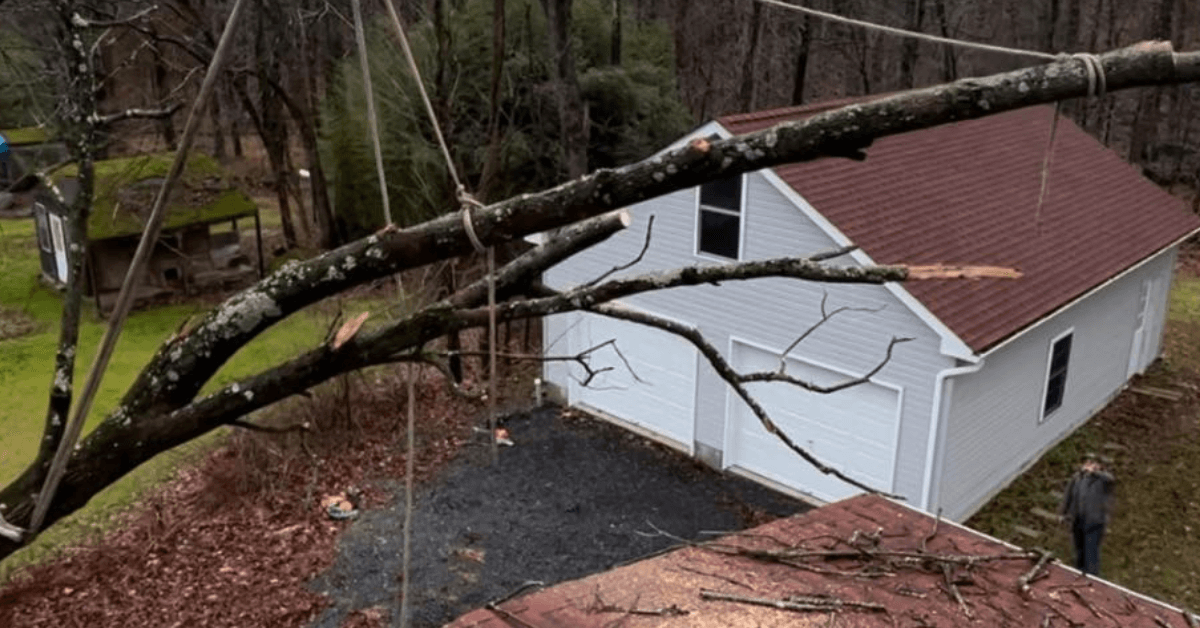
These signs may indicate that the root plate has started shifting. A tree that leans toward a house, garage, or frequently used area creates an additional concern because a fall could damage property or injure someone.
2. Deep Cracks and Splits in the Trunk
Deep cracks in the trunk or major branch unions can indicate that the wood is separating under stress. Pay attention to vertical cracks, splitting trunks, and weak branch forks. These defects can affect the structural strength of a tree, particularly when they extend through a major supporting section.
Strong winds, ice accumulation, and heavy branches can put additional pressure on these areas. Some cracks develop gradually, while others appear after a storm or sudden change in weather. If a crack extends through a major trunk or fork, arrange a professional inspection rather than attempting to repair it yourself.
3. Mushrooms or Fungus Near the Base
Mushrooms, shelf-like conks, and other fungal growth near the trunk or roots may indicate wood decay. Some fungi break down supporting wood inside trees, potentially reducing their ability to withstand wind and heavy loads. Fungal growth alone does not establish how much decay is present. However, it deserves attention, particularly when combined with leaning, cracks, or dead branches.
Do not assume that removing visible mushrooms will solve the problem. Fungal growth on the outside may be associated with decay inside the tree. A reliable tree firm in Sellersville, PA can assess the tree’s condition and determine whether further action is necessary.
4. Dead Branches and Hollow Trunks
Large dead branches can fall without warning, particularly during storms. A hollow trunk may also indicate internal decay, although a cavity does not automatically mean the entire tree is unsafe. The amount and location of remaining sound wood influence the tree’s structural condition.
Signs to watch out for:
- Extensive branch dieback
- Large cavities
- Loose bark
- Fungal growth on major limbs
It is important to notice whether several branches have stopped producing leaves during the growing season. Widespread dieback may point to stress, disease, root problems, or other conditions affecting the tree.
A professional assessment can determine whether selective trimming is sufficient or whether removal may be necessary. Kemp Tree Service provides tree trimming services to address dead, damaged, and potentially hazardous branches.
5. Lifted Soil or Exposed, Damaged Roots
Roots anchor trees and help them remain stable during strong winds. When major roots are damaged by construction, excavation, or soil movement, the tree may become more vulnerable to failure.
Look out for:
- Soil mounds or cracks near the trunk
- Exposed roots
- Roots cut during nearby construction
Changes in soil level or drainage can also affect root conditions. A tree that begins leaning while the soil around its root plate lifts may be particularly unstable.
What to do:
- Avoid digging around the base to investigate the roots.
- Additional disturbance could make an existing problem worse.
- Have the tree inspected if you notice root damage, soil movement, or a sudden change in its position.
Does Every Warning Sign Mean a Tree Must Come Down?
No. A tree with a visible defect does not always require removal. The level of risk depends on the severity of the problem, the likelihood of failure, and what could be struck if the tree or a branch falls.
A tree with a few dead branches may only need trimming. Extensive decay, a major trunk split, or serious root instability may make tree removal in Sellersville necessary.
Why Do Healthy-Looking Trees Sometimes Fall?
Trees can have hidden structural problems even when their canopies look healthy. Common contributing factors include:
- Internal decay: Fungi can weaken supporting wood inside trunks and limbs.
- Root damage: Excavation and construction can affect anchoring roots.
- Saturated soil: Heavy rainfall can contribute to soil instability.
- Severe weather: Strong winds, snow, and ice place additional loads on weakened trees.
- Structural defects: Cracks and weak branch attachments can increase failure risk.
A full canopy does not guarantee that a tree is structurally sound. Internal decay and root problems may not be visible from the ground. This is why property owners should pay attention to changes in the trunk, branches, and surrounding soil instead of judging a tree by its leaves alone.
What Should You Do If You Notice a Warning Sign?
Take these precautions if you suspect a tree may fall:
- Keep people away: Move children, pets, and visitors away from the tree and its potential fall zone.
- Protect nearby property: Move vehicles and outdoor belongings if you can do so safely.
- Avoid DIY work: Do not climb, cut large branches, or attempt to straighten a leaning tree.
- Stay clear of power lines: If a tree touches or threatens electrical wires, contact the utility provider.
- Arrange an inspection: Contact a professional, especially if the tree has started leaning or the ground around its roots has shifted.
Do not wait for another storm if the tree appears unstable. Avoid parking beneath it or using the area until the concern has been assessed. If the tree is actively shifting, cracking, or falling, keep your distance and seek emergency assistance. Penn State Extension’s guide to inspecting trees for hazards also recommends checking all trees after a severe storm, regardless of their previous health.
How Kemp Tree Service Helps Manage Hazardous Trees
Kemp Tree Service helps property owners in Sellersville, PA, and surrounding communities address potentially hazardous trees. When dead or weakened branches create a safety concern, tree trimming can remove affected limbs. If extensive decay, trunk damage, or root instability makes a tree unsafe to retain, tree removal may be necessary.
For fallen trees and urgent storm-related hazards, we provide emergency tree service. The appropriate response depends on the tree’s condition and the immediate risk to people and property. If you notice warning signs on your property, call Kemp Tree Service at (267) 550-0072.
Frequently Asked Questions
How can I tell if a tree is about to fall?
Look for a sudden lean, deep trunk cracks, fungal growth, large dead branches, and lifted soil around the roots. These signs may indicate structural or root problems. A professional inspection can help establish the level of risk.
Is a leaning tree always dangerous?
No. Some trees grow at an angle naturally and remain stable. A sudden lean or noticeable change in position, especially with lifted soil or damaged roots, is more concerning and should be inspected.
Can a tree with fungus at the base be saved?
Possibly. Fungal growth does not automatically mean the tree must be removed. An inspection can help determine the extent of decay, the tree’s remaining structural strength, and whether it can remain safely.
Do dead branches mean the entire tree is dying?
Not necessarily. A healthy tree can have individual dead branches. However, large dead limbs over homes, driveways, or walkways may need prompt attention because they can fall and cause damage.
Can storms make a healthy-looking tree fall?
Yes. Storms can expose hidden weaknesses, damage roots, or cause weakened trees to fail. A tree that looks healthy from the outside may still have internal decay or structural defects.
What should I do if a tree has already started falling?
Keep everyone away from the tree and surrounding area. Do not attempt to brace, climb, or cut it. Stay clear of power lines and contact an emergency tree service.
Does Kemp Tree Service provide tree services in Sellersville, PA?
Yes. Kemp Tree Service provides tree service in Sellersville, PA, and surrounding communities with tree removal, tree trimming, emergency tree services, stump grinding, land clearing, and tree planting. Call (267) 550-0072 to discuss your tree-care needs or request a free estimate.